
Mercado en Grado
Mercado en Grado
History
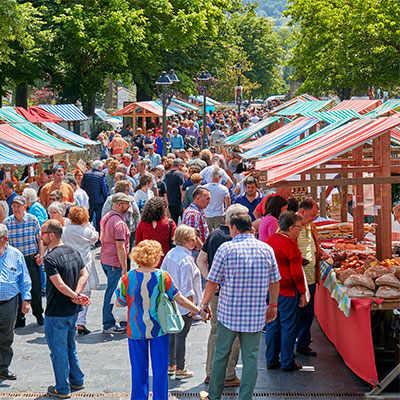
The market of Grau/Grado is the oldest in Asturias and its origin dates back to the Middle Ages, when King Alfonso X the Wise granted the Carta Puebla to the Mosconian village, being one of the privileges granted the celebration of a weekly market, which in this case was on Wednesdays. Already in the Modern Age, Grau/Grado began to hold two crowded markets, on Wednesdays and Sundays, thanks to its fertile vegas and the passage through the council of communication routes as crucial as the Camín Real de la Mesa and the Camino de Santiago. And so to this day.
Products
Manuel Pedregal Street is the main artery that connects the entire fair and the General Ponte Square, where most of the food stalls are grouped, to envelop the visitor in a unique journey, full of sensations and pleasant surprises.
Offer
The Grado market offers cheeses from all areas of Asturias and of all types: cow, sheep, and goat, raw or pasteurized milk. There are also sausages for the compango (carnivorous accompaniment of the fabada), and Tineo chosco. In the sweet section, the anise rosquillas, biscuits, suspiros, cocadas, and bollos preñaos or hojaldre empanadas with ham and cheese, tuna or octopus stand out. And breads of all kinds are sold: wheat, rye, corn or escanda.
Other products
Of course, you can find textiles, fashion, accessories, shoes, handicrafts, etc.
Known as the Asturias market
The market known as the Asturias market has this appellation with all its merits, because besides this Sunday appointment so immersed means a meeting with the best local restaurants for vermouth or to eat, and with excellent confectioneries.